
BREATHE CLEAN: A REGIONAL CALL FOR CLIMATE AWARENESS ACROSS THE WESTERN BALKANS
Overview and Regional Context
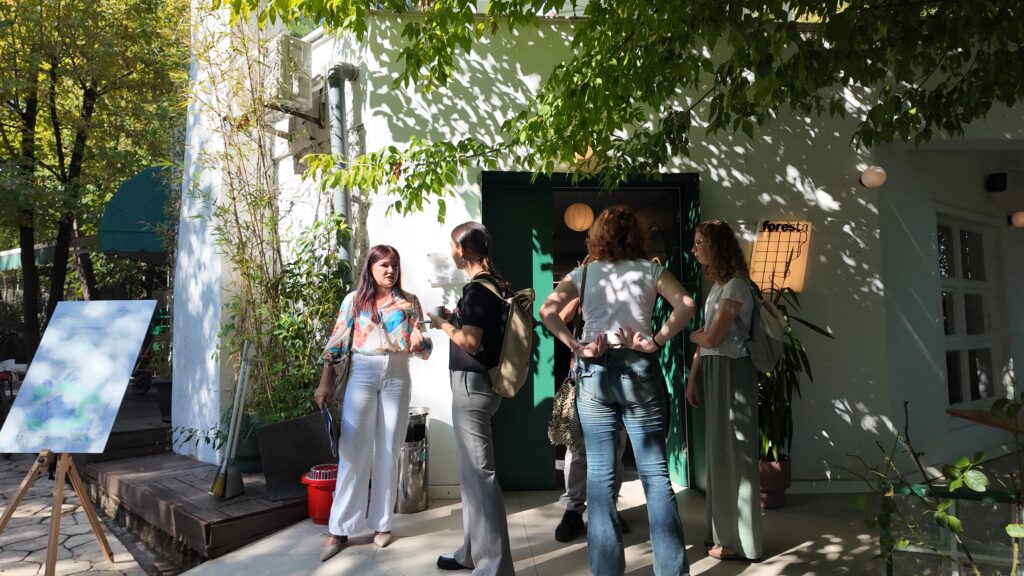
In late September 2025, coordinated awareness activities took place across 10 Western Balkan cities under the regional campaign Breathe Clean, aligned with World Lung Day. Instead of organising a single centralised event, a shared methodology was adapted locally across Albania, Bosnia and Herzegovina, Montenegro, North Macedonia and Croatia, demonstrating that climate awareness can be strengthened through citizen engagement connected to daily routines and familiar spaces.
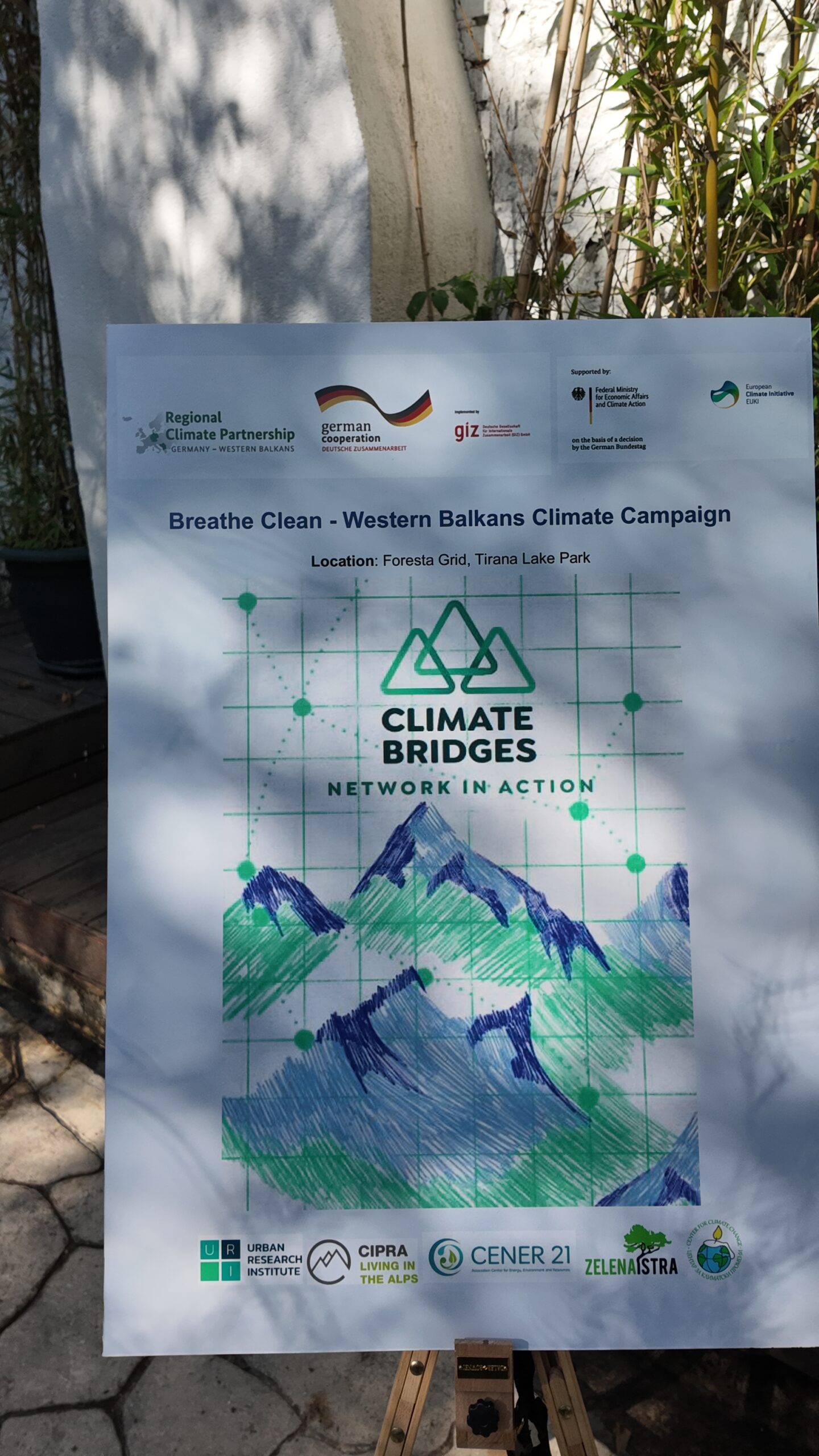
The campaign was developed through the Climate Bridges Network in Action project, led by the Urban Research Institute (URI), which coordinates the project consortium and guides the campaign’s implementation in Albania together with other national partners. With support from EUKI and the Regional Climate Partnership (RCP), the initiative expanded from four initial locations to ten cities and more than fourteen civil society organisations.
In the weeks before implementation, URI coordinated a digital build-up campaign using shared visuals and messaging formats. The implementation involved a broad partnership network: Build Green Group, Eco Design and Management Institute (EDMI), Environmental Centre for Studies and Implementation (QMSZ), Une Gruaja Albania, Environment and Community Berat, ARNO, Green Home, Lifelong Learning Center (SCU), Ecology and Research Association (EID), the Faculty of Forestry Sarajevo, and three Climate Bridges Network consortium members – Zelena Istra (Croatia), CENER21 (Bosnia and Herzegovina) and the Centre for Climate Change (North Macedonia).
Tirana – Flagship Event and Regional Anchor
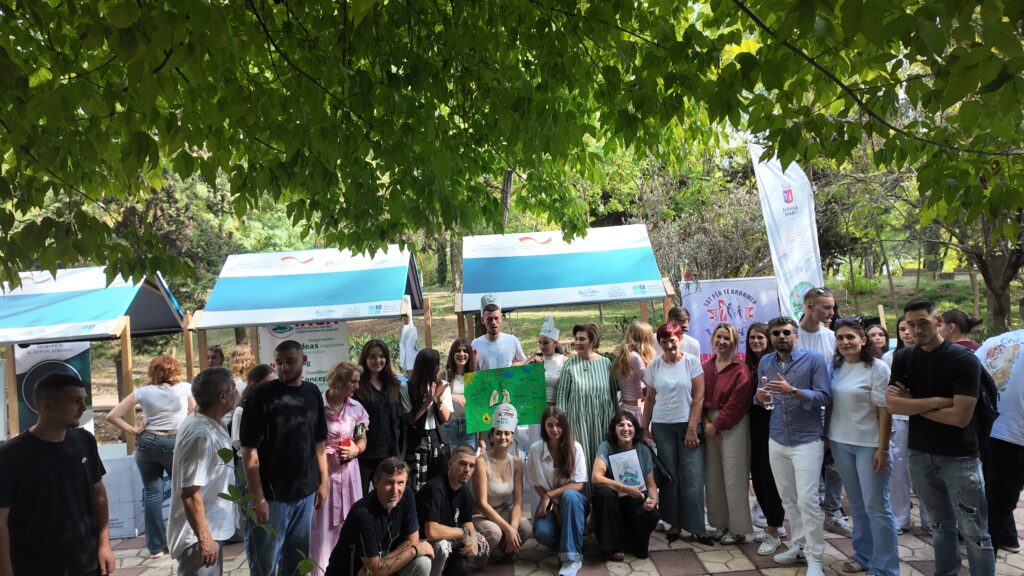
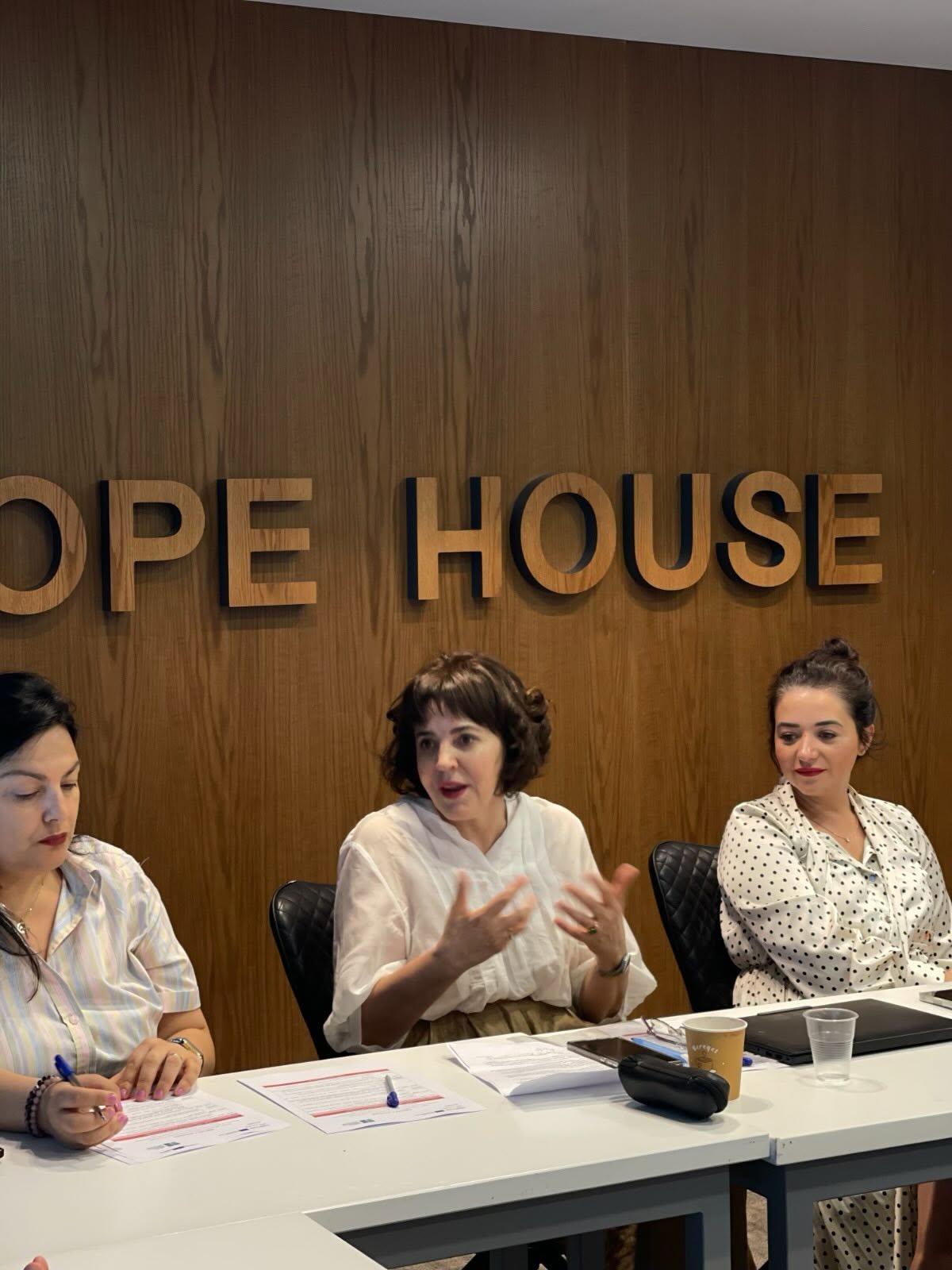
Tirana hosted one of the campaign’s key activities, bringing together institutions, experts and civil society under URI’s coordination. The event began with a conference and open discussion at the heart of Tirana Lake Park, where URI welcomed participants and introduced the campaign in connection with regional coordination efforts. Representatives from the German Embassy, the Ministry of Environment, GIZ Albania, scientific researchers, public health professionals and civil society organisations joined the discussions. URI facilitated exchanges between decision-makers, researchers and civil actors to connect public health with climate policy and urban resilience.
The day continued outdoors through the Climate Action Fair, bringing together several Albanian organisations, such as AlbGreen, Environment & Community, INCA, Community Development Center “Today for the Future”, Build Green Group Albania, Together for Life, ISHUI, EcoAlbania, to showcase informational materials, quizzes, studies, and youth-friendly learning tools. Build Green Group operated a real-time air quality demonstration using a SmartCitizen Kit to measure PM2.5, CO₂ and NO₂. Citizens were asked to respond to the question “Why does clean air matter to me?” and shared reflections related to mobility, consumption, pollution and personal wellbeing. Many participants stated that it was their first time seeing live pollution data, which made the topic clearer and directly relevant. Young volunteers supported public interactions, and URI ensured that messages from other cities were integrated into the overall narrative, reinforcing Tirana’s role as the campaign’s regional hub.
A complementary youth-focused initiative was implemented by EDMI at the Faculty of Civil Engineering, where visual installations contrasted clean and polluted air and QR-linked tools introduced climate-related questions about emissions and daily choices. URI aligned messaging across both activities, demonstrating that public dialogue, institutional involvement and youth engagement can be part of the same campaign structure.
State-Level Activities Across Albania
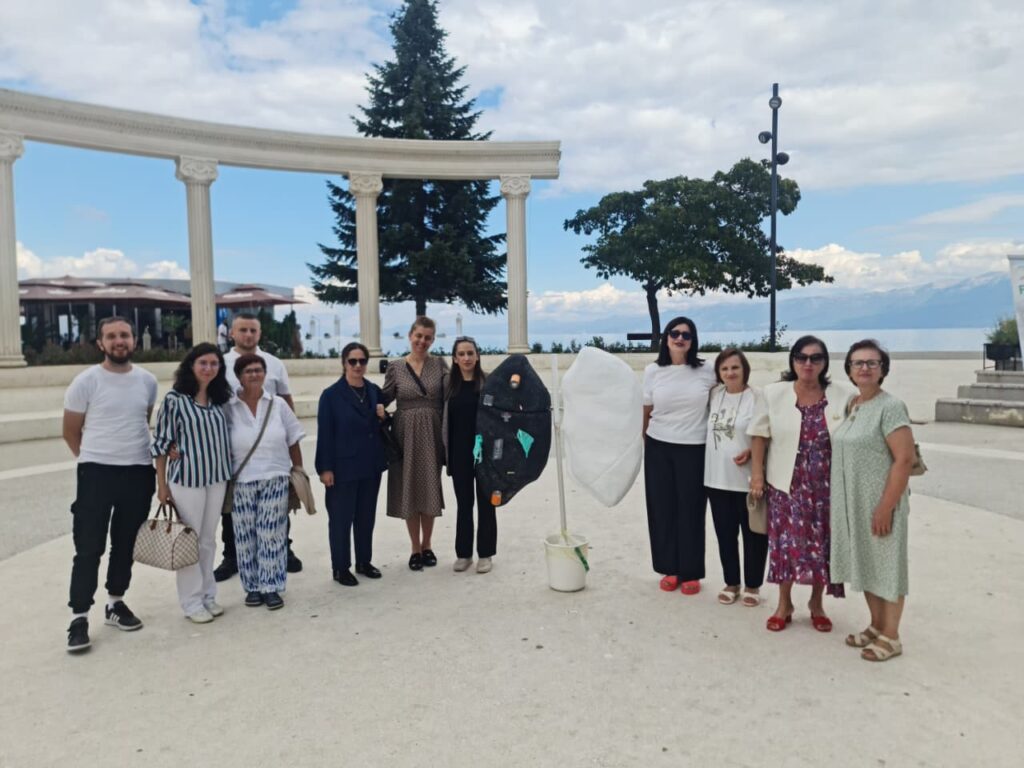
Photo by Me the Woman
Pogradec hosted a school-based activity led by Une Gruaja Albania featuring a symbolic lung installation and discussions with students on respiratory health and youth exposure to pollution.
In Berat, Environment and Community organised awareness sessions supported by a clothing reuse and redistribution action to highlight how consumption patterns affect emissions. The activity combined education with practical examples of circular economy.
In Librazhd, the QMSZ held a community forum with a pulmonologist, followed by story-sharing sessions with women from rural and peri-urban areas. Testimonies will be displayed in health centres to illustrate how environmental concerns link directly to lived experiences.
Regional Actions in Bosnia and Herzegovina, North Macedonia, Montenegro and Croatia
In Sarajevo, CENER21 and the Faculty of Forestry organised an event combining expert talks on air pollution, a garden awareness activity and a symbolic tree planting that encouraged reflection on urban greenery and respiratory health.
In Nova Bila and Travnik, SCU delivered “My Bicycle My Planet”, a series of cycling and learning activities designed to promote sustainable mobility and educate on emissions.
In Banja Luka, the EID facilitated classroom discussions linking household behaviours with air quality and health. Students engaged with expert speakers and tested their understanding through discussion-based exercises.
In Skopje, ARNO, the “Nothing New” Repair Center and the Centre for Climate Change delivered repair workshops and awareness activities at Delfina Square, working with urban activists and sustainable mobility organisations. The Clean Air Bike Parade closed the day with a strong public message on healthier urban environments.
In Podgorica, Green Home used Gorica Hill as an open conversation space. Families and walkers were invited to share their views and questions on air quality, proving that non-formal locations can engage citizens more effectively than structured venues.
In Pula, Zelena Istra led a public awareness programme in Portarata Square. Citizens participated in spirometry lung tests, a bicycle repair station and public storytelling sessions on pollution and everyday life.
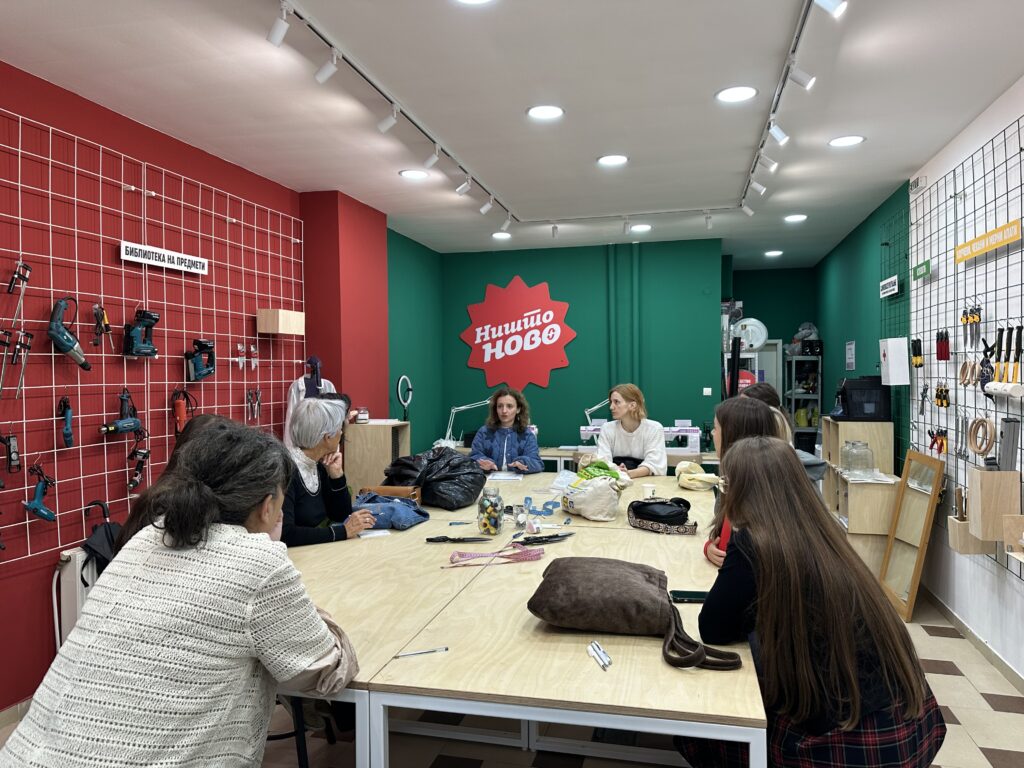
Photo by ARNO
Communication Method and Replication Potential
Across all locations, the campaign followed a common methodology based on accessible language, participation and familiar public spaces. Instead of technical presentations, the message focused on health, mobility, affordability and household decisions. Activities avoided formal speeches, relying instead on interactive formats such as data demonstrations, repair workshops, message boards and peer conversations. This method helped citizens connect climate topics with their own realities and encouraged them to take part rather than only observe.
URI ensured that the communication approach remained consistent across cities by coordinating messaging and documentation. Several organisations expressed interest in applying the method within youth initiatives, municipal programmes and education systems during 2025 and 2026. The campaign showed that environmental awareness can be strengthened with modest resources when coordination is strong and learning formats are adapted to local contexts.
Conclusion
The Breathe Clean campaign showed that climate awareness grows when institutions, citizens and young people are invited into the same dialogue. With URI as the regional coordinator, the campaign combined institutional participation with youth engagement and public outreach across ten Western Balkan locations. The initiative provided a model for regional cooperation that can be replicated through dialogue, informal learning and practical tools. Above all, it demonstrated that awareness can begin with everyday questions and shared spaces, and that collective resilience is built through collaboration.