Climate Champions 2025 Crowned in Pula: Regional Climate Action in the Spotlight
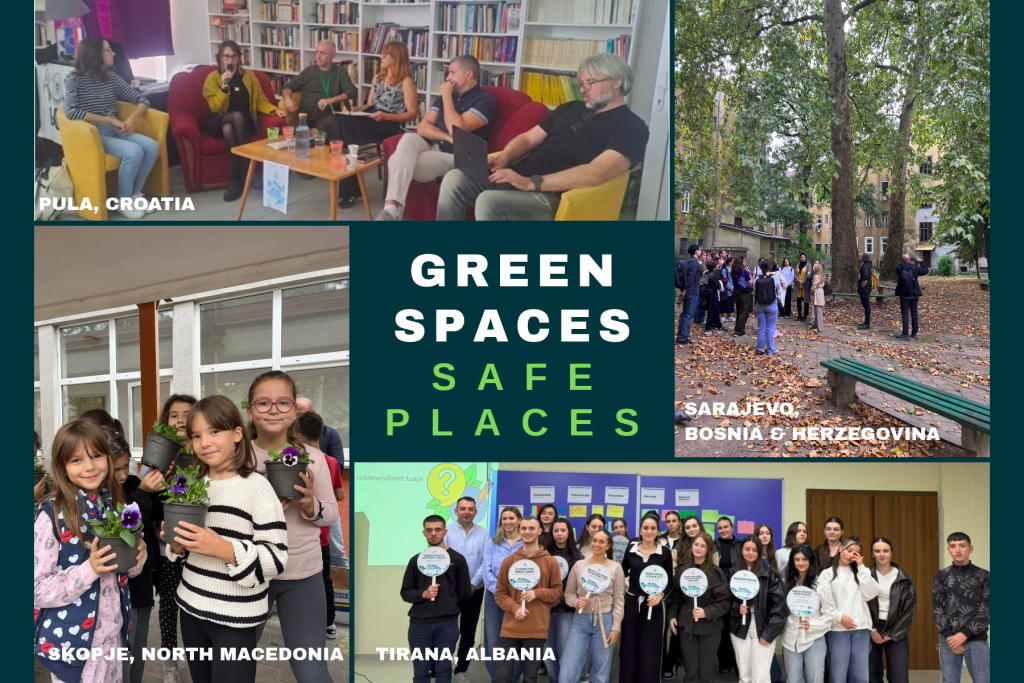
Between 5 and 10 October 2026, the Climate Bridges Network’s regional campaign “Green Spaces, Safe Places” came to life in four cities: Tirana, Sarajevo, Skopje and Pula.
Tirana, Albania – Students Rethink Public Space
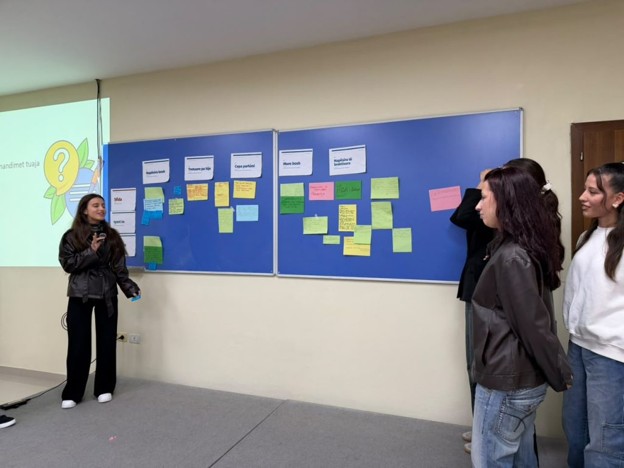
In Tirana, the Urban Research Institute held an informal discussion with bachelor’s and master’s students at the Faculty of Natural Sciences, together with its Department of Biology and Dr Marjol Meço. The discussions were highly productive and focused on the environmental challenges Tirana currently faces. Particular attention was given to the city’s green spaces, which are under growing pressure. The loss of greenery is directly affecting air quality and the everyday lives of residents.
The event also worked as a platform where young people could develop ideas and discuss them openly. Students pointed to problems they see in their neighborhoods every day: abandoned areas that have turned into unsafe places, bare walls that need greenery, and sidewalks without shade. They also spoke about rising temperatures in the city, made worse by the lack of trees and shade, and about parking lots that have appeared informally within apartment block areas, taking up space that could serve residents in other ways. Above all, they stressed the need for more areas where people can spend time outdoors.
The present students came from different cities across the country, such as Tirana, Korça, Has, Fush Kruja, Dibra, etc., and shared their concerns about green spaces in their hometowns. Regardless of the city, the concerns were the same. This reflects that protecting and expanding green spaces is an issue that matters for the entire country, not just the capital. Among other topics, the risk posed by invasive alien species was also discussed. Not all greenery benefits the environment, as some species displace native plants and harm biodiversity. This is why the choice of plant species deserves careful consideration when green spaces are planned and maintained. Students also stressed that new planting should be proportionate to the urban area, with species and numbers suited to the available space, so that greenery fits the city rather than overwhelming it.
Pula, Croatia – Experts and Citizens Debate the Future of a Green City
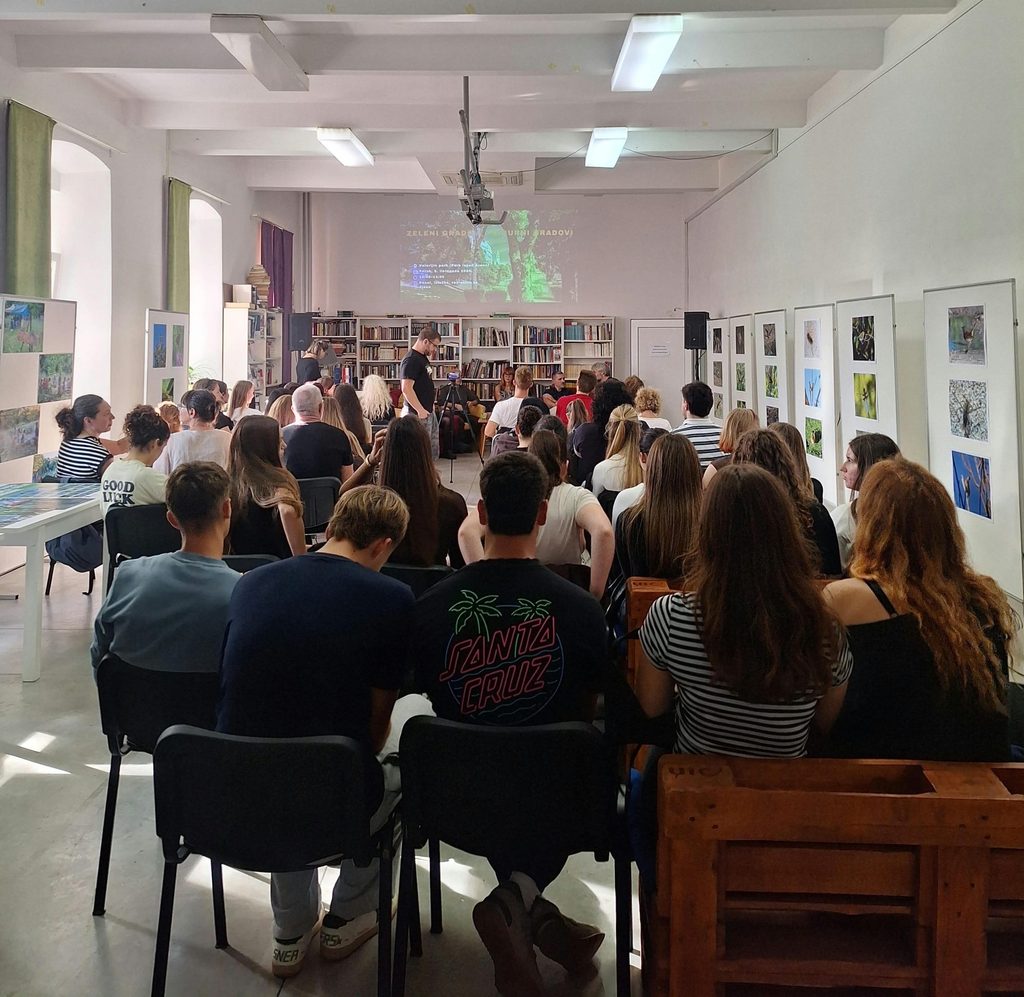
In Pula, Zelena Istra held the panel “Green Cities – Safe Cities” at the Rojc Community Centre, streamed live on its social media and recorded for Radio Rojc. About 50 visitors, including citizens, students and members of local civic initiatives, followed a discussion with two architects, a landscape architect, a sociologist and an environmental activist, moderated by Irena Burba. Their shared message: green spaces are crucial green infrastructure with measurable benefits for health, climate resilience and city budgets, not only decoration, and planning them well takes real citizen participation. Visitors could also see a wildlife photo exhibition by Marinko Babić and add their own ideas to a board of residents’ opinions collected in an online campaign. Both stay on display at Rojc until 16 October. Workshops for school pupils, postponed because of the weather forecast, will take place on October 21.
Sarajevo, Bosnia and Herzegovina – Growing Green Spaces That Feed
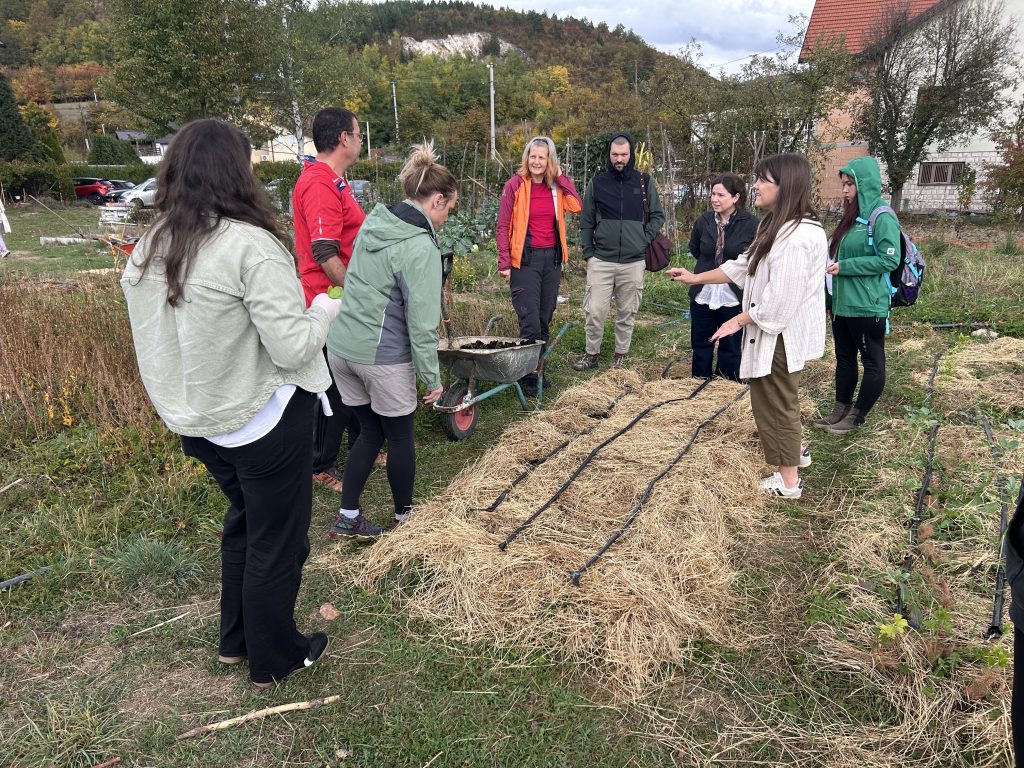
In Sarajevo, Cener 21 and partners ran a programme from 5 to 10 October focused on urban gardening and local food production, in cooperation with the Faculty of Agriculture and Food Sciences, the City of Sarajevo, JU Druga gimnazija and OPZ Sinergija Plus. It opened with the Green House Party for more than 100 guests, with a thematic tour, an informal exchange on neglected green spaces and locally produced food. The Urban Gardening Exhibition traced gardening in Sarajevo from the wartime years to today through photographs and personal testimonies, and was joined by the guided walk “Sarajevo Hidden Gems”. The programme closed with a hands-on crop-rotation workshop for around 20 participants, held despite wind and rain. Online, citizens mapped more than 30 neglected or underused green locations on the Ushahidi platform. The three in-person activities drew over 250 participants.
Skopje, North Macedonia – Children Plant the Seeds of a Greener Karposh
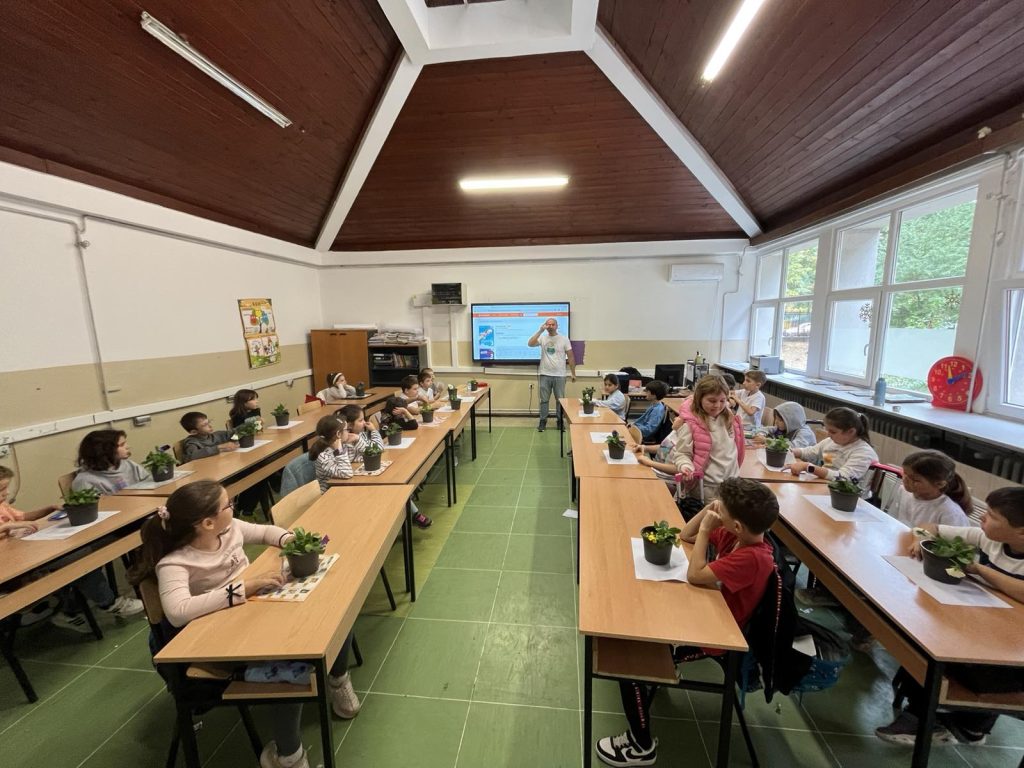
In Skopje, the Center for Climate Change held its action in the Municipality of Karposh with Primary School “Lazo Trpovski”. About 50 second- and third-grade pupils painted flowerpots, planted greenery and talked about how plants cool the city and improve shared spaces. The Center also donated three tree saplings to the Municipality for planting in a public space. A questionnaire (98 respondents, not representative) showed that 87% feel their neighbourhoods need more greenery, and 76% rate the maintenance and cleanliness of green spaces poorly.
Four cities, four formats, one shared message: green spaces make cities healthier, safer and more liveable, and protecting them is a task for communities, institutions and experts together.